
T: +86-18906892820
F4-19037-6#, Yiwu Intl Trade Mart, Yiwu Jinhua, Zhejiang, China (Mainland)

Views: 0 Author: Site Editor Publish Time: 2026-11-03 Origin: Site


High-voltage infrastructure relies on the predictable performance of dielectric materials. A single insulator failure can result in catastrophic grid downtime and severe financial penalties. Utility planners and procurement engineers must balance upfront capital expenditure with long-term operational costs when specifying materials for transmission and distribution lines. The choice between traditional porcelain and a toughened Glass Insulator heavily depends on environmental factors, maintenance capabilities, and mechanical load requirements. This guide provides an objective, engineering-focused evaluation of glass and porcelain insulators, breaking down their mechanical durability, dielectric properties, and lifecycle economics to support evidence-based procurement decisions.
Toughened glass manufacturing relies on precise thermal control and automated consistency. Furnaces heat the raw silica, soda ash, and limestone mixture to extreme temperatures until molten. The molten glass is pressed into the classic disc shape and immediately subjected to a rapid cooling process using high-velocity air jets. This specific thermal treatment creates a permanent compressive stress layer on the outer surface of the glass. This outer shell locks the internal structure in tension, providing immense mechanical resilience against external impacts and thermal shock. The homogeneity of the molten glass ensures consistent electrical properties across thousands of units coming off the assembly line.
Modern aluminous porcelain utilizes a completely different, batch-oriented manufacturing approach. Manufacturers blend raw clay, feldspar, and quartz or alumina into a precise slurry. They shape the raw units using a wet-process extrusion and turning method. The shaped clay must dry slowly in controlled humidity rooms to prevent warping before receiving a protective glaze. Finally, high-temperature kilns fire the porcelain to vitrify the material. This firing process fuses the minerals into a dense, hard ceramic, but the process is inherently more variable than glass pressing.
Quality control diverges sharply between the two technologies, directly impacting field reliability. Glass remains transparent during the production phase. Inspectors and automated optical sensors can visually detect internal defects, bubbles, or impurities immediately on the factory floor. Porcelain is entirely opaque. Detecting micro-voids in porcelain requires advanced ultrasonic scanning. Manufacturers must also perform rigorous electrical testing before deployment to catch hidden internal flaws that could lead to premature failure on the tower.
Engineers evaluate insulators against strict baseline metrics to ensure grid stability. Minimum Failing Load (MFL) dictates the ultimate mechanical strength of the hardware, ensuring the string can hold the heavy conductor under ice and wind loads. Creepage distance determines surface tracking performance in polluted environments. A longer, more complex creepage path prevents leakage currents from crossing the insulator surface and causing a flashover. Dielectric withstand voltage and puncture resistance measure the core electrical reliability of the dielectric body against lightning strikes and switching surges.
Operational goals drive the final material specification for any given transmission route. Utilities aim to minimize unexpected line drops caused by mechanical separation of the insulator string. They seek to reduce corona discharge and radio interference, which waste energy and generate noise complaints from nearby residents. Optimizing the maintenance-to-replacement ratio remains a top priority for grid operators. Every hour a line crew spends searching for a faulty disc drains operational maintenance budgets and exposes workers to high-voltage hazards.
| Performance Metric | Toughened Glass | Aluminous Porcelain |
|---|---|---|
| Dielectric Puncture Resistance | Extremely High (Shatters before puncture) | Moderate (Susceptible to internal micro-punctures) |
| Visual Fault Detection | Instant (Missing shed is visible from afar) | Difficult (Requires live-line instrumental testing) |
| Thermal Shock Resistance | Excellent (Pre-stressed surface absorbs shock) | Good (Can crack under sudden extreme changes) |
| Custom Geometry Manufacturing | Limited (Standardized disc shapes) | Excellent (Can be molded into complex post shapes) |
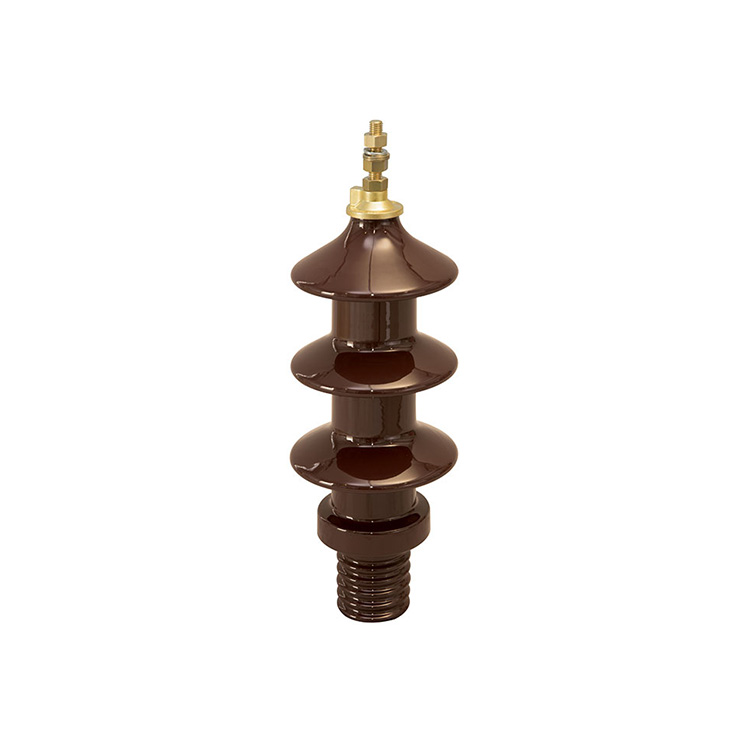
Dielectric puncture resistance heavily favors toughened glass in practical field applications. A glass unit is virtually unpunctureable while in service. If electrical stress exceeds its absolute threshold, the shell shatters completely. It breaks before a localized puncture can occur through the dielectric body. This binary failure mode eliminates the risk of hidden electrical degradation. You either have a fully functional insulator or a visibly shattered one, leaving no ambiguity for maintenance crews patrolling the line.
Porcelain behaves quite differently under extreme electrical stress. It can suffer from internal dielectric breakdown over decades of continuous service. Micro-cracks propagate silently through the ceramic body due to manufacturing impurities or electrical fatigue. These cracks eventually lead to sudden electrical failure without any external warning signs. Under steep-front impulse voltages and lightning strikes, glass often delivers higher peak dielectric strength, absorbing the transient overvoltage without sustaining permanent internal damage.
Surface tracking and arc resistance depend heavily on material density and surface finish. Both materials resist tracking exceptionally well compared to polymers. However, the dense, homogeneous nature of glass prevents deep surface degradation over long-term electrical exposure. Power arcs tend to glide over the smooth glass surface without biting into the material. Glazed porcelain can sometimes suffer localized glaze damage during severe arcing events. Once the protective glaze burns away, the slightly porous ceramic beneath becomes exposed to moisture and contamination, accelerating failure.
Both materials boast exceptional compressive strength capabilities, easily supporting the massive weight of bundled conductors. Tensile capabilities vary based on the specific hardware, pin design, and the type of cement used during assembly. Porcelain excels in high-tension dead-end applications where the insulator must hold the full horizontal tension of the wire. Engineers frequently specify Porcelain Strain Insulators where custom geometries are mandatory. Porcelain can be manufactured into massive, single-piece post insulators. These solid posts handle extreme cantilever loads in substations effortlessly, providing rigid support for heavy busbars and disconnect switches.
Sustained vibration and mechanical fatigue test structural integrity over decades of exposure to the elements. Wind-induced conductor galloping transfers massive kinetic energy directly to the insulator string. Glass absorbs vibration effectively due to its flexible pin-and-cap articulation. The ball-and-socket joints provide necessary mechanical damping, dissipating the energy before it damages the tower attachment points. Porcelain strings perform similarly but require careful hardware matching. Poorly matched hardware can induce fatigue at the cement joints holding the porcelain disc to its metal cap, eventually leading to mechanical separation.
When crews rig a dead-end assembly, the mechanical load profile changes dramatically. The insulators sit horizontally, exposing them to different bending moments and water shedding dynamics. Porcelain strain units are often preferred here because their solid core design resists the bending forces applied during installation and tensioning. Glass strings handle horizontal tension well, but the sheer weight of a massive porcelain strain insulator provides a stabilizing mass against wind uplift in certain terrain configurations.
Thermal expansion coefficients dictate stability during rapid temperature shifts. Porcelain offers excellent steady-state thermal stability. It handles high ambient temperatures in desert environments without issue. However, toughened glass handles rapid thermal shock far better. Freezing rain hitting a sun-baked insulator can crack standard porcelain due to uneven contraction. The pre-stressed compressive surface of glass resists this sudden contraction easily, making it highly reliable in regions that experience wild temperature swings between day and night.
Pollution resistance also differs between the two materials. Glass surfaces are inherently smoother than glazed porcelain at a microscopic level. This smoothness minimizes contaminant buildup from industrial smog, agricultural dust, or coastal salt fog. It reduces corona discharge and arcing in heavily polluted regions. In highly contaminated areas, utilities apply Room Temperature Vulcanizing (RTV) silicone coatings to both materials. This achieves hydrophobicity comparable to composite polymer units, forcing water to bead up and roll off rather than forming a conductive sheet across the surface.
Both inorganic materials are completely immune to UV degradation. Polymer insulators chalk, crack, and lose their hydrophobicity under intense sunlight. Glass and porcelain ignore solar radiation entirely. They easily maintain a stable 50-year baseline lifespan even in brutal, high-UV environments like the Australian outback or the American Southwest. Sand abrasion may dull the surface slightly over decades, but the core dielectric strength remains completely intact.
Initial procurement economics depend heavily on manufacturing scale and global supply chains. The automated, continuous production of glass contrasts sharply with the batch-firing process of high-grade aluminous porcelain. Glass factories can churn out thousands of identical units daily with minimal human intervention. This mass production efficiency often makes glass highly cost-effective to procure in bulk for mega-projects spanning hundreds of miles. Porcelain requires more manual handling during the shaping and glazing phases, which can impact production timelines and availability during peak construction seasons.
Weight plays a major role in installation labor and logistics. Glass units are generally slightly lighter per disc than their porcelain equivalents. This minor weight reduction compounds rapidly across massive transmission projects requiring hundreds of thousands of discs. It lowers shipping freight costs across oceans and rail networks. It simplifies handling at remote staging yards where crews must manually load the units onto trucks. Lighter strings accelerate installation labor in challenging mountainous terrain where helicopters hoist assemblies into place, allowing the aircraft to carry more strings per flight.
Packaging and transit damage also factor into initial costs. Glass insulators are highly resilient to transit vibration. If a unit breaks during shipping, it shatters completely, and crews simply discard it. Porcelain can sustain micro-cracks from rough handling in transit. These cracks are invisible to the naked eye. If a damaged porcelain unit is installed on the tower, it becomes a ticking time bomb for a future electrical fault. This reality forces utilities to over-order porcelain to account for transit attrition and strict pre-installation testing.
Fault detection drives the largest operational cost disparity between the two technologies. Glass provides a massive financial advantage through rapid visual inspections. A shattered glass disc is instantly visible from a helicopter or drone flying at high speeds. Maintenance crews can survey hundreds of miles of transmission line in a single afternoon. High-resolution cameras capture the missing glass skirts effortlessly, allowing engineers to pinpoint the exact tower and string that requires maintenance without ever leaving the office.
Punctured porcelain units look completely normal from the outside. Finding a failed porcelain disc requires labor-intensive live-line testing. Crews must physically climb towers or use bucket trucks to access the live conductors. They must apply buzzers or voltmeters to every single disc on the string to measure the voltage drop. Eliminating this routine instrumental testing yields massive operational savings for glass insulator strings. The labor hours saved by switching to aerial visual inspections often justify the material choice alone.
When replacement is necessary, the logistics differ slightly. A shattered glass insulator leaves a mechanical stub that keeps the string intact, but the string's overall creepage distance is reduced. Crews can schedule the replacement during normal maintenance windows rather than executing an emergency outage. Replacing a porcelain unit often happens only after a complete string failure or during a massive, scheduled testing sweep. The predictability of glass failures allows utilities to optimize their labor deployment and minimize expensive emergency overtime pay.
Evaluating the long-term financial impact requires looking beyond the initial purchase order. A comprehensive financial model incorporates initial purchase, installation labor, routine inspection frequency, fault location difficulty, and replacement rates. Glass heavily front-loads the savings by drastically cutting the annual inspection budget. The ability to use drones instead of climbing crews fundamentally alters the maintenance economics of a transmission line over a half-century of operation.
The spontaneous breakage rate in glass remains exceptionally low in modern manufacturing. This rare breakage is far outweighed by the hidden degradation rate found in aging porcelain strings. As porcelain ages, the likelihood of internal puncture increases, requiring more frequent instrumental testing sweeps in the later decades of its life. Glass maintains a flat, predictable maintenance profile from year one to year fifty. You fly the line, you look for missing sheds, and you replace them as needed. This simplicity provides financial certainty for utility asset managers planning decades into the future.
Long-distance HVAC and HVDC transmission lines represent the ideal scenario for glass deployment. Areas requiring rapid helicopter or drone inspections benefit immensely from the visual fail-safe mechanism. Regions experiencing extreme temperature fluctuations rely heavily on the thermal shock resistance of toughened glass. Glass Insulators for Power Transmission see widespread specification across the UK, Sweden, Russia, Canada, and the US. These regions leverage specific climate resilience and aerial maintenance strategies to optimize grid uptime and keep maintenance crews safe.
The scalability of glass fits massive grid expansion projects perfectly. Standardized manufacturing parameters ensure that unit number ten thousand performs exactly like unit number one. This consistency gives grid planners confidence when designing inter-state transmission corridors crossing diverse topographies. Whether the line crosses a freezing mountain pass or a scorching desert valley, the glass string behaves predictably, allowing engineers to standardize their hardware inventory and simplify supply chain management.
Highly corrosive environments demand specialized hardware that can withstand constant chemical bombardment. Chemical plants, mining operations, and coastal substations face severe contamination challenges. They utilize Industrial Glass Insulators to combat aggressive airborne pollutants. Salt fog, acidic industrial smog, and heavy particulate matter degrade standard ceramic glazes rapidly over time, leading to tracking and flashovers.
The hard, smooth surface of industrial glass minimizes surface degradation. It prevents contaminants from biting into the dielectric body. This resistance prevents catastrophic flashovers in critical industrial facilities where a power blip could ruin millions of dollars of product. When heavy washing is required to remove stubborn industrial grime, glass withstands high-pressure water jets without surface scoring. Maintenance teams can aggressively wash the insulators without fear of stripping away a protective glaze.
Porcelain remains the superior choice in several specific, high-stress use cases. High-cantilever load applications demand the rigid, unyielding strength of solid porcelain posts. Specialized substation architectures often require custom porcelain geometries that glass simply cannot replicate. Manufacturers can mold porcelain into highly complex shapes, varying the shed diameter and core thickness precisely before firing to meet unique architectural and electrical clearances.
Environments with extreme vandalism risks also favor porcelain. While glass shatters safely without dropping the line, frequent replacement due to rifle fire or rock-throwing becomes a severe operational burden in certain rural areas. Porcelain absorbs minor ballistic impacts better. A bullet might chip the porcelain skirt, but the unit often retains enough dielectric strength to delay immediate string replacement until scheduled maintenance. In areas where hunters frequently use insulators for target practice, porcelain reduces the frequency of emergency truck rolls.
Vandalism remains the primary risk factor for glass units in rural and remote areas. Rifle fire or rock throwing will shatter the dielectric shell instantly. However, the fail-safe design ensures the power line does not drop. The shattered glass leaves a thick mechanical stub inside the cap. The metallic cap and pin interlock securely around this stub. This maintains full mechanical tension, preventing catastrophic tower failure and deadly line drops. The line remains energized, though the string loses a portion of its creepage distance.
Proper handling protocols during installation are critical to maximizing lifespan. Crews must avoid scratching or chipping the compressive outer layer of glass insulators before hoisting them into position. Rough handling in the staging yard, such as dragging the strings across gravel, can compromise the toughened shell and lead to spontaneous shattering shortly after installation. Once installed properly, however, the units require zero mechanical maintenance. Training rigging crews to handle the discs by the metal caps rather than the glass skirts eliminates most installation-induced failures.
Sourcing low-quality porcelain introduces severe grid reliability risks that may not manifest for years. Poorly fired porcelain may contain microscopic internal voids or uneven moisture distribution. These voids lead directly to premature electrical puncture under surge conditions like lightning strikes. Strict factory acceptance testing (FAT) is absolutely mandatory when procuring porcelain from new or unverified suppliers. Utilities must demand porosity tests, temperature cycle tests, and steep-front impulse tests to verify the internal integrity of the ceramic.
Utilities must vet manufacturers of both glass and porcelain rigorously. Procurement teams should demand strict compliance with international standards. IEC and ANSI testing protocols provide the baseline for quality assurance. Requesting historical field performance data from the manufacturer helps validate their production consistency. Visiting the manufacturing facility to audit their quality control processes, specifically looking at their thermal quenching controls for glass and their kiln temperature mapping for porcelain, ensures you are buying a 50-year asset, not a 5-year liability.
A: Both toughened glass and high-quality porcelain insulators have an expected service life of approximately 50 years. They easily reach this milestone provided they are specified correctly for their specific environmental conditions, pollution levels, and mechanical loads.
A: Toughened glass is designed to shatter completely if its dielectric or mechanical integrity is compromised. This allows maintenance crews to spot failures visually from a distance using drones or helicopters. Porcelain requires specialized, labor-intensive instruments to detect hidden internal punctures.
A: Glass insulators generally offer lower initial procurement capital and significantly lower long-term inspection costs. Eliminating manual live-line tower climbing and instrumental testing makes glass highly economical over the entire operational lifespan of a transmission project.
A: No. When a toughened glass insulator shatters, the remaining metallic cap and pin interlock around a glass stub. This fail-safe mechanism maintains the mechanical strength required to hold the power line securely in place until crews replace the unit.
A: Composite insulators are significantly lighter and offer excellent inherent hydrophobicity. However, they are highly susceptible to UV degradation, tracking, and bird damage. This typically results in a shorter lifespan of 15 to 25 years, compared to the 50-year lifespan of inorganic glass and porcelain.
A: Spontaneous shattering is exceptionally rare in modern units. It can occasionally be caused by microscopic nickel sulfide inclusions introduced during the raw manufacturing process. High-quality manufacturers use rigorous thermal shock testing to eliminate these defective units before deployment.
A: Porcelain strain insulators are preferred in applications requiring custom geometries, solid post designs, or extreme cantilever strength. They are also ideal in remote areas with high rates of vandalism, where the shattering characteristic of glass would require excessive and costly replacement labor.


