
T: +86-18906892820
F4-19037-6#, Yiwu Intl Trade Mart, Yiwu Jinhua, Zhejiang, China (Mainland)

Views: 0 Author: Site Editor Publish Time: 2026-10-27 Origin: Site


How do overhead power lines stay insulated under heavy loads and changing weather? A glass insulator supports reliable electrical separation and mechanical stability. This guide explains suspension types, string designs, load ratings, and selection factors for overhead networks.
Disc suspension insulators are individual insulating units connected into strings. Each unit usually consists of a toughened glass body and metal end fittings. Ball-and-socket connections are common in many designs, allowing compatible units to be assembled into longer strings. The number of units depends on the required insulation level, system voltage, environmental conditions, and applicable design standards.
This modular structure gives utilities flexibility when designing overhead networks. Instead of relying on one large insulating component, engineers can select a suitable string arrangement for the intended application. The mechanical rating of each unit must still meet the specified loading conditions. The complete assembly also needs to satisfy electrical clearance and insulation coordination requirements.
Disc designs are used in transmission and distribution systems where the support arrangement suits the conductor layout. However, not every disc insulator is interchangeable. Dimensions, coupling type, mechanical strength, and electrical characteristics must match the approved design. Buyers should check drawings and technical documents before ordering replacement units. A product that looks similar may have different fittings or performance ratings.
For procurement planning, review the available glass insulator product range and identify models that match the project specification. The final choice should be based on verified ratings and installation requirements, rather than appearance alone.
Standard glass suspension insulators are designed around established dimensions, fittings, and performance requirements. These products can simplify procurement when a utility needs repeatable components for a defined line design. Their suitability still depends on the required mechanical load, insulation level, creepage distance, and environmental exposure. A standard design is useful only when its documented characteristics match the intended installation.
Standardized designs can also make replacement planning more straightforward. Maintenance teams can identify compatible units and keep suitable stock for routine repairs. This is particularly valuable when a network contains many similar structures. However, a replacement must match the original specification, including the connection interface and required performance class. Selecting a unit based only on a broad product description may introduce compatibility problems.
Before ordering, engineers should confirm the product drawing, model designation, rated mechanical load, and applicable standard. They should also check whether the existing string uses the same coupling system. If a proposed substitute differs in dimensions or fittings, the engineering team should assess it before installation. These checks reduce the risk of delivery delays and unplanned field modifications.
For example, the toughened glass suspension insulator U40B can be reviewed as a specific product option. Its suitability for any project must be established from its complete technical documentation and the network's requirements.
Some overhead networks operate in environments where pollution, moisture, or salt exposure can affect insulation performance. In these locations, engineers may consider suspension insulators with profiles designed to provide suitable creepage distance and surface behavior. Outer ribs and disc geometry influence the path along which leakage current may travel. Their value depends on the actual environment and the complete product design.
Coastal areas can expose equipment to salt deposits and humid air. Industrial locations may experience dust or chemical contamination. Rural networks can face seasonal moisture, wind, and temperature changes. These conditions should be assessed before selecting an insulator profile. No single glass design provides identical performance in every environment, so the choice should follow the project's pollution assessment and applicable standards.
Weather resistance also depends on manufacturing quality and the condition of the finished component. Toughened glass may offer useful mechanical and inspection characteristics, but it still requires suitable design, installation, and maintenance. Buyers should request relevant test documentation and verify that the product meets the required mechanical and electrical criteria. Claims such as “weather resistant” should be supported by clear specifications rather than treated as a complete performance guarantee.
Note: Select an insulator profile according to site pollution, moisture exposure, and required creepage distance. Do not rely on appearance alone.
A suspension string combines individual insulator units to achieve the required electrical and mechanical performance. The total string length depends on the number of units, their dimensions, the fittings, and the required clearances. Engineers determine the arrangement using the system voltage, insulation coordination, environmental conditions, and applicable design rules. A higher voltage may require a longer string, but there is no universal unit count for every network.
The complete string must provide suitable insulation under normal operating conditions and expected overvoltages. Its design must also account for conductor movement, wind, and mechanical loading. The supporting structure needs sufficient clearance between energized parts and grounded members. Engineers should therefore assess the string as part of the whole line design, not as a collection of separate products.
When planning a new installation, the engineering team should confirm the required string configuration before placing a bulk order. The specification should identify the number of units, model, coupling type, and any grading or hardware requirements. For replacement work, existing drawings and approved records provide a useful starting point. However, changes to voltage, conductor configuration, or environmental conditions may require a fresh design review. The string arrangement should always be verified by qualified personnel.
Mechanical load ratings indicate the load a suspension insulator is designed and tested to withstand under the applicable standard. They are important because overhead conductors impose sustained tension, while wind, ice, and other conditions can change the mechanical forces acting on the line. The required class depends on the line design, conductor arrangement, support spacing, and expected loading conditions.
A higher mechanical rating is not automatically the best choice for every installation. The selected unit must meet the calculated requirements while remaining compatible with the fittings and string assembly. Engineers should verify the rating, test basis, dimensions, and coupling arrangement. They should not assume that two units are interchangeable because their outer profiles look similar.
For procurement teams, the model designation and rated mechanical load should appear clearly in the quotation and technical documents. If a supplier proposes an alternative class, the engineering team should assess its suitability before approval. Mechanical ratings must also be distinguished from electrical ratings. A product can meet one requirement while failing to meet another, so both must be checked against the project specification.
Ball-and-socket fittings are common on many disc suspension insulators. They allow individual units to be connected into strings using compatible hardware. This arrangement supports modular assembly and can simplify the replacement of individual units during maintenance. However, the fitting dimensions and coupling class must match the other components in the string.
Compatibility should be confirmed using the relevant drawings and standards. A fitting that appears close in size may not lock correctly or may fail to provide the intended connection. Procurement teams should specify the coupling type, dimensions, and required hardware when requesting quotations. They should also verify whether the fittings are included in the quoted product or supplied separately.
During installation, qualified personnel must follow the manufacturer's assembly instructions and the utility's safety procedures. Incorrect handling can damage glass or metal fittings before the unit enters service. The assembled string should be checked against approved drawings before it is placed under load. These precautions help maintain mechanical integrity and reduce avoidable replacement work.
Toughened glass is used in suspension insulators because it can provide the electrical insulation and mechanical properties required by suitable overhead line designs. The finished product combines the glass body with metal fittings to support the conductor assembly. Its performance depends on the glass quality, manufacturing process, geometry, fittings, and verified test results.
Outdoor equipment must withstand more than normal electrical stress. Temperature changes, rain, wind, pollution, and mechanical loading can affect service conditions. The insulator design should therefore match the location's environmental demands. Buyers should review the manufacturer's specified operating conditions and applicable test documentation rather than relying on general descriptions such as “high strength” or “weather resistant.”
Toughened glass designs may also offer a practical inspection advantage. In certain designs, a damaged glass unit can be easier to identify visually because the glass body may break in a recognizable way. However, inspection methods and acceptance criteria must follow the manufacturer's instructions and the utility's procedures. A visible inspection does not replace every required electrical or mechanical check. Proper selection and maintenance remain essential throughout the component's service life.
Contamination can reduce the surface insulation performance of an overhead glass insulator. Dust, salt, industrial deposits, and other pollutants may collect on exposed surfaces. When moisture forms a film over these deposits, leakage current can increase. Under severe conditions, this may contribute to surface flashover. The level of risk depends on pollution severity, humidity, surface geometry, creepage distance, and the local electric field.
Engineers should assess the installation environment before selecting a profile. A location exposed to salt spray may require different insulation considerations from a cleaner inland site. However, selecting a profile with a longer creepage path is not a substitute for evaluating all relevant electrical and environmental requirements. The final design must comply with the applicable standards and the utility's insulation coordination approach.
Maintenance plans should reflect local conditions. Some installations may require more frequent inspection or cleaning than others. Procedures must be approved for the equipment and carried out by qualified personnel using appropriate safety controls. Buyers should ask suppliers for documented environmental and electrical performance data when pollution resistance is a key requirement. This helps distinguish verified product characteristics from broad marketing claims.
Glass suspension insulators are exposed to changing outdoor conditions throughout their service life. Wind, rain, temperature cycles, pollution, and mechanical movement can affect the overall line assembly. The glass body is only one part of the system. Metal fittings, coupling points, conductor hardware, and the supporting structure must also remain suitable for the expected conditions.
Correct installation is important because damaged components or incompatible fittings can undermine the performance of an otherwise suitable product. Handling instructions should be followed to avoid impact damage. During installation, the crew should verify the model, inspect visible condition, confirm fitting compatibility, and assemble the string according to approved drawings. Any suspected defect should be assessed before the unit is placed into service.
Routine inspection helps identify damage and changing site conditions. Maintenance teams should record the unit's location, observed condition, and any action taken. They should follow the utility's procedures when deciding whether a component requires replacement. Electrical equipment must never be inspected or handled without the required authorization and safety precautions. A clear maintenance process helps reduce unexpected failures and supports more reliable network operation.
Tip: Keep inspection records linked to the exact insulator model and installation location. This improves traceability during maintenance and replacement.
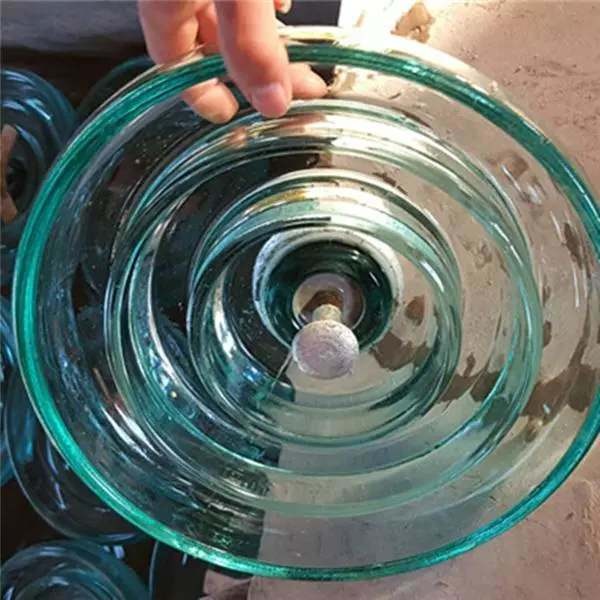
Selecting a glass suspension insulator begins with the engineering specification. Buyers should identify the system voltage, required insulation level, mechanical load class, creepage distance, dimensions, and coupling type. They should also confirm the applicable product standard and any project-specific requirements. These details help suppliers quote a product that can be evaluated against the actual installation.
A model number alone may not communicate every relevant characteristic. Similar designations can refer to products with different dimensions, fittings, or standards. The purchasing team should therefore request the complete datasheet and product drawing. If an alternative model is proposed, the engineering team must review the differences before approval. This is especially important for replacement projects, where compatibility with existing hardware is essential.
Environmental requirements should also appear in the specification. Pollution severity, humidity, temperature variation, and expected mechanical loading can affect the selection. Where customization is necessary, buyers should provide approved drawings or clearly defined technical requirements. The supplier should confirm any deviations in writing. A complete specification reduces ambiguity and helps prevent incorrect products from reaching the installation site.
Quality documentation helps buyers verify that a proposed insulator meets the project's requirements. Depending on the application, relevant evidence may include mechanical test results, electrical test reports, dimensional inspection records, material information, and quality management documentation. The applicable standard determines which tests and records are required. Buyers should identify these requirements before production begins.
The documents must relate to the actual model being purchased. A report for a similar product may not demonstrate compliance for a different design. Procurement teams should check model identification, ratings, test conditions, and the standard referenced in each report. If information is incomplete, ask the supplier to clarify it before approving the quotation or order.
Inspection arrangements should also be agreed in advance. For large orders, the buyer may require pre-shipment inspection or independent verification. The purchase agreement should define the inspection scope, acceptance criteria, timing, and responsibility for associated costs. These steps help avoid disputes and reduce the risk of receiving products that do not match the approved specification. Documentation is most useful when it supports a clear and consistent acceptance process.
Traceability allows utilities and purchasing teams to connect supplied products with their model, batch, documentation, and delivery records. This information becomes valuable when an insulator needs inspection, replacement, or further technical review. It can also help identify whether a problem affects a single unit or a larger group from the same delivery.
Buyers should confirm how the supplier identifies products and batches. Depending on the specification, records may include model codes, batch references, inspection documents, certificates, and packing lists. The exact system varies by manufacturer and project requirements. The important point is to maintain a reliable link between the physical goods and their approved technical records.
For ongoing network maintenance, keep product data alongside installation locations and inspection history. This makes it easier to identify compatible replacement units later. It also reduces the risk of ordering a product with a different coupling type or mechanical rating. Traceability does not replace technical verification, but it supports better decisions throughout the equipment's service life.
Two glass suspension insulators may look similar but differ in mechanical rating, dimensions, creepage distance, or fitting design. These differences can affect whether a product is suitable for a particular overhead network. Buyers should compare the full technical specification rather than selecting a model based on appearance or a short product title.
A useful comparison starts with the required mechanical load and electrical performance. It then checks dimensions, connection type, applicable standards, environmental suitability, and supporting test documentation. If a supplier offers a lower-rated model at a lower price, the product should not be treated as an equivalent substitute without engineering approval. The same applies to products with different fitting systems or installation dimensions.
A comparison table can help organize the review:
Comparison item | What to verify |
|---|---|
Mechanical rating | Required load class and test basis |
Electrical performance | Applicable withstand and insulation requirements |
Dimensions | Structural height, disc diameter, and creepage distance |
Fittings | Coupling type and hardware compatibility |
Environmental suitability | Pollution and outdoor service conditions |
Documentation | Applicable standards and relevant test records |
This process helps purchasing teams compare like-for-like products. Any deviation should be recorded and reviewed before the order is approved.
The product specification is only one part of a successful procurement decision. Buyers should also compare production lead time, packaging, shipment arrangements, and delivery responsibilities. Glass components require suitable protection during transport because impact or poor handling can damage them before installation. The packaging method should match the product design and the expected shipping conditions.
Ask suppliers to explain how units will be separated, secured, and protected inside the shipment. Confirm whether wooden cases, export cartons, or other packaging methods are included in the quotation. The correct choice depends on the product, shipment size, handling route, and buyer's requirements. Buyers should also clarify how visible shipping damage will be documented and reported.
Delivery terms affect the final cost and allocation of responsibilities. A quotation may cover factory collection, port delivery, or a different agreed destination. These offers are not directly comparable unless their scope is understood. Confirm the agreed Incoterms, freight arrangements, insurance responsibility, and required shipping documents. This helps purchasing teams evaluate both product quality and the total supply arrangement.
A proposed alternative may appear attractive because it has a lower price or shorter lead time. However, buyers should assess whether it meets the project's electrical, mechanical, environmental, and installation requirements. A substitute that does not fit the existing string or meet the required rating can create additional engineering work and delay installation.
The review should begin with the approved specification. Compare the alternative's model, dimensions, fittings, mechanical rating, electrical performance, and applicable standards. Then identify any differences that could affect service. The supplier should provide technical documentation for the proposed model, and the responsible engineering team should approve the substitution before purchase.
Long-term suitability also depends on maintenance and replacement planning. Standardizing compatible components may simplify inventory management, but standardization must not override project-specific requirements. Keep records of approved alternatives and the reasons for acceptance. This provides a clear basis for future procurement and helps prevent accidental substitutions. A sound decision balances cost, availability, technical compliance, and the needs of the complete overhead network.
Tip: Do not approve a substitute solely because its dimensions look similar. Confirm ratings, fittings, and applicable test documentation first.
Glass suspension insulators provide electrical insulation and mechanical support for overhead networks. Proper selection depends on load ratings, voltage requirements, fittings, and environmental conditions. Load Break Tools offers glass insulator products for power transmission, helping buyers evaluate suitable solutions for their project needs.
A: Disc suspension insulators are widely used. Their dimensions, mechanical ratings, and profiles vary by application.
A: It provides electrical insulation and mechanical support when assembled into a suitable string.
A: Voltage requirements, mechanical load, creepage distance, pollution, fittings, and applicable standards all matter.
A: It provides suitable insulation and mechanical properties. Some designs also make visible damage easier to identify.
A: Some manufacturers offer customized dimensions or profiles. Confirm technical feasibility and compliance before ordering.
A: Check the exact model, technical datasheet, applicable standards, and relevant mechanical and electrical test records.


