
T: +86-18906892820
F4-19037-6#, Yiwu Intl Trade Mart, Yiwu Jinhua, Zhejiang, China (Mainland)

Views: 139 Author: Site Editor Publish Time: 2026-07-16 Origin: Site


Opening electrical circuits under load poses a massive operational risk in overhead distribution systems. Pulling a standard fuse cutout without an interrupting mechanism invites severe arc flash hazards. You risk melting hardware, triggering localized outages, and causing catastrophic injuries to utility personnel. Standard disconnects simply cannot handle live current interruptions safely. The air ionizes immediately, sustaining a brilliant and destructive plasma arc.
Linemen need a reliable, repeatable, and portable solution to bridge this dangerous gap. Specialized arc-interrupting devices prove absolutely essential for these operations. They protect field personnel while preserving vital grid infrastructure from heat damage. This article provides an objective, technical evaluation of the load break tool.
We will explore how these devices operate mechanically to extinguish high-voltage arcs. You will learn what utility procurement and engineering teams must verify before standardizing their fleets. By understanding the core mechanics and strict evaluation criteria, you can ensure safer daily operations across your entire distribution network.
A load break tool provides a portable, reliable method to safely open disconnect switches, cutouts, and power fuses under full load without drawing a hazardous external arc.
The core mechanism relies on a rapid, spring-loaded internal separation combined with arc-extinguishing materials (often ablative gases) to interrupt the current safely.
Evaluating these tools requires balancing voltage/amperage ratings (e.g., 15kV, 27kV, 38kV capacity) against ergonomic factors and compatibility with existing utility infrastructure.
Pulling a standard switch under active load creates immense danger. Utility lines carry enormous energy. Air normally acts as an excellent electrical insulator. However, high voltage easily breaks down this natural insulation. When metallic contacts separate under load, the current desperately wants to keep flowing. It bridges the growing air gap instantly.
This ionization of air sustains a brilliant, superheated plasma arc. The physics of arcing dictate rapid destruction. The plasma burns at thousands of degrees Fahrenheit. It melts copper, aluminum, and steel components within seconds. It also emits intense ultraviolet light. This flash can permanently blind an operator. You risk catastrophic burns and equipment vaporization if you ignore these physics.
Standard utility disconnects lack internal quenching mechanisms. They rely entirely on external devices to break the electrical current safely. If an operator pulls a live fuse cutout blindly, the resulting arc often triggers an explosive failure. You destroy the pole hardware immediately. You also endanger the lineman performing the task.
The utility industry requires a much smarter approach. We need safe, portable, and highly repeatable interruption methods. A viable solution must eliminate external arcing completely. It must protect the operator from plasma exposure. It must prevent heat damage to the primary contacts. Finally, crews must be able to deploy it efficiently across vast and remote grid locations.
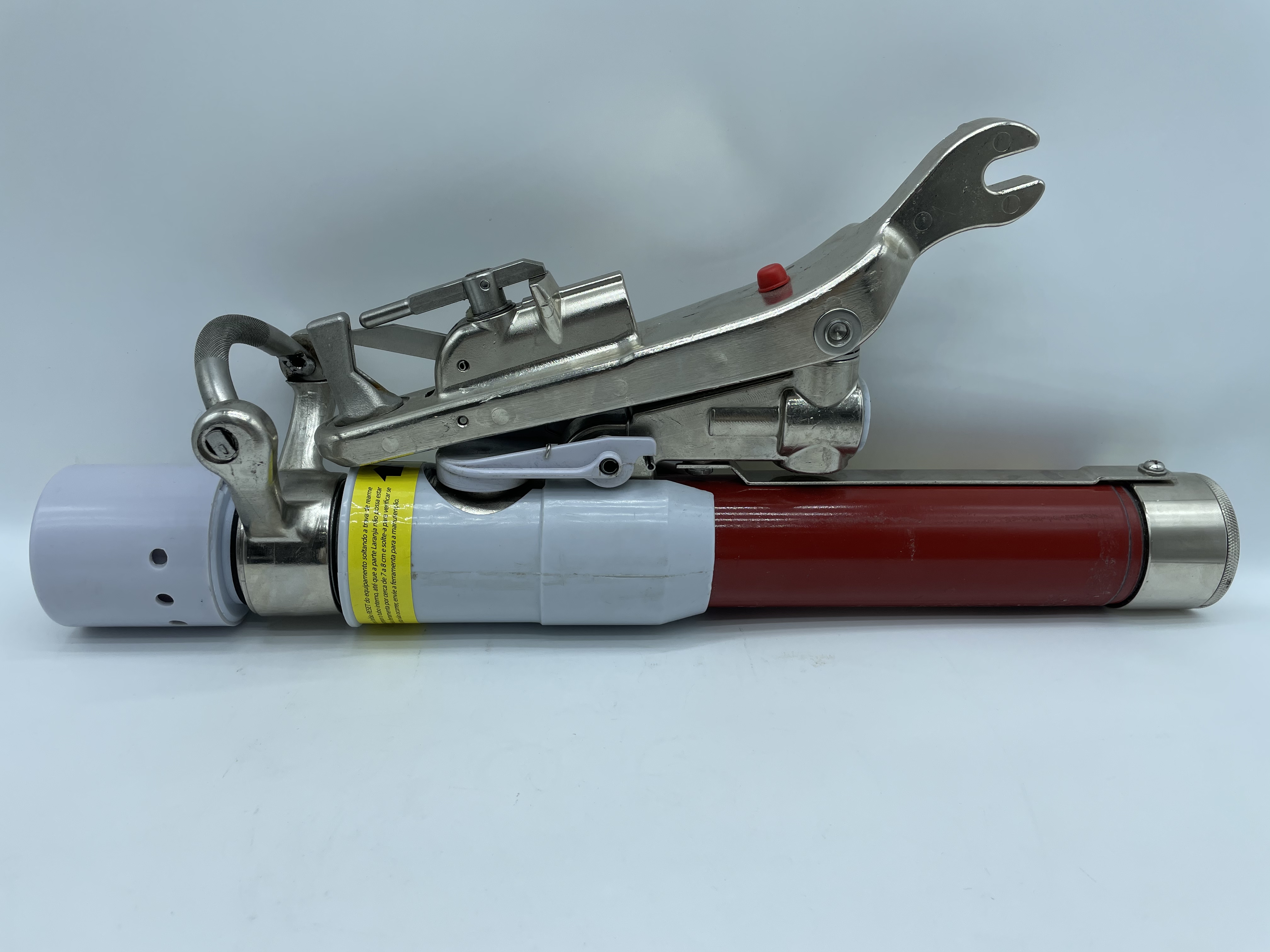
A portable load break tool solves this exact operational problem. It serves as a lightweight, highly specialized instrument. Operators mount the device securely onto a standard insulated hot stick. They use it to temporarily bridge a cutout or disconnect switch. The device handles the current safely while the main switch opens. It then interrupts the flow entirely within its shielded internal chamber.
Industry terminology often overlaps regarding these devices. Many seasoned utility crews use the term loadbuster tool in the field. This specific name originated from S&C Electric decades ago. Today, linemen use it as a generic term for any portable interrupter. However, multiple manufacturers produce highly capable and competing interrupting devices.
Utilities generally choose between portable tools and permanent switch installations. Both categories solve the arcing problem. They just approach it from different financial and operational angles. Portable devices offer immense flexibility. Permanent switches offer immediate convenience.
We can compare these two primary solution categories directly:
Feature | Portable Load Break Tools | Permanent Load Break Switches |
|---|---|---|
Deployment Model | One tool per utility truck. | Installed physically on every pole. |
Capital Expenditure | Highly cost-effective. Lower upfront investment. | Very high. Requires massive capital outlay. |
Operational Flexibility | Moves anywhere the crew goes. | Fixed to a single geographic location. |
Maintenance Needs | Requires regular manual resets and factory rebuilds. | Subject to constant weather exposure. |
Arc interruption requires precise timing and flawless mechanical execution. The internal events happen in milliseconds. The tool must suppress the plasma before it breaches the external housing. We can break this complex mechanical process down into four distinct steps.
Attachment and Bridging: The operator hooks the tool across the disconnect switch. This action creates a parallel path for the electricity. The current bypasses the main switch contacts entirely. It flows directly through the metallic body of the tool.
The Pulling Action: The operator pulls down firmly on the hot stick. This downward motion physically opens the main utility switch. The current continues flowing safely through the internal contacts of the tool. Inside the housing, a heavy-duty spring compresses tightly. It stores significant mechanical kinetic energy.
Internal Tripping Mechanism: The tool extends to a precise, pre-calibrated limit. A latch suddenly releases the fully compressed spring. The internal contacts fly apart instantly. This high-speed separation happens independently. The operator's manual pulling speed does not affect it. The spring guarantees a rapid, consistent break every single time.
Arc Extinguishing: An internal arc forms briefly between the separated contacts. This plasma heats the surrounding ablative material. This chamber lining often consists of specialized plastics like Delrin. The extreme heat causes the plastic to rapidly release a de-ionizing gas. The gas floods the chamber and cools the plasma. Alternating current naturally drops to zero volts twice per electrical cycle. The gas extinguishes the arc completely at this exact zero-voltage crossing.
This sequential process guarantees operator safety. It isolates the danger within a highly engineered environment.
You cannot buy these tools blindly based on price alone. System parameters vary wildly between different utility grids. You must specify exact electrical ratings to ensure compatibility. Check your maximum system voltage requirements carefully. Some rural grids operate at 15kV. Others require 27kV or even 38kV heavy-duty capacity.
Verify the maximum interrupting current rating. The device must handle your worst-case load scenarios. Ensure the tool matches your nominal frequency perfectly. Electrical mismatches lead to catastrophic internal failures.
Infrastructure compatibility also dictates your purchasing decisions. Evaluate the physical fit meticulously. The hook must latch securely onto your existing ecosystem of cutouts. It must engage your specific power fuses smoothly. Proprietary hardware sometimes causes physical interference. A universal fit prevents extreme frustration in the field.
Ergonomics play a massive role in daily safety. A lineman holds this device at the far end of a 30-foot fiberglass stick. Weight distribution determines user fatigue. A poorly balanced tool increases accident risks exponentially. Operators must be able to reset the tool easily under adverse field conditions.
Demand Independent Testing: Never rely strictly on marketing brochures or sales claims.
Require Certifications: Ask for IEEE C37.41 and ANSI compliance certificates prior to purchase.
Review Lab Reports: Analyze the short-circuit and thermal cycle testing data.
Check Dielectric Ratings: Verify the moisture resistance limits for wet-weather deployments.
Rigorous verification protects your financial investment. It also shields your utility from severe liability issues.
Owning a portable interrupting device introduces serious maintenance obligations. Routine inspections keep your crews alive. You must implement strict visual and mechanical checking protocols. Operators should check the stroke counter before every shift. They must inspect the exhaust muffler for dangerous blockages. They should also test the manual reset mechanism daily.
Wear and tear represent constant, unavoidable risks. The ablative material inside the chamber degrades over time. Every single operation burns away a tiny fraction of the arc-quenching plastic. The tool has a strictly finite operational lifespan. It eventually requires a comprehensive factory rebuild. Ignoring these operation limits invites explosive device failure.
You will face field failures if crews lack standardized training. Common operational errors happen frequently. Operators sometimes pull the stick at an improper angle. This binds the internal track. Failing to reset the tool fully before the next use causes dangerous misfires. Standardized training mitigates these hazards dramatically.
Ensure all usage aligns perfectly with OSHA regulations. Follow your internal safety mandates strictly. Your safety manual must dictate exactly when and where operators deploy these tools. Weather conditions heavily impact safe operation. Moisture compromises the dielectric strength of the fiberglass stick and the tool housing.
Applying the tool to a circuit that exceeds its maximum voltage rating.
Ignoring a jammed or sticky reset mechanism instead of tagging it out.
Using the tool in heavy rain without consulting manufacturer moisture limits.
Failing to firmly seat the upper ring over the disconnect hook.
Vendor evaluation dictates your long-term operational success. Assess competing manufacturers based on their supply chain reliability. You need immediate access to replacement parts. Mufflers, contacts, and reset springs wear out regularly. Supply chain bottlenecks will leave your trucks unequipped.
Review the manufacturer warranty terms carefully. Understand their factory repair turnaround times. A broken tool sitting in a repair queue hurts your grid resilience. Look for vendors who offer certified overhaul services. They should replace the ablative liners and recalibrate the spring mechanisms professionally.
Instead of rolling out a new tool blindly, take actionable steps. Run a targeted pilot program first. Give the evaluation unit to a select, highly experienced lineman crew. Let them test it under real-world weather conditions. Gather their unvarnished feedback on ergonomics, weight, and reliability.
Use this field data to make your final procurement decision. Pilot programs reveal hidden flaws quickly. They highlight physical compatibility issues with your older pole hardware. They also ensure operator buy-in before you execute a massive fleet-wide purchase.
Standardizing on a reliable load break tool is a critical investment in lineman safety. It dramatically enhances overall grid resilience. You eliminate external arcing hazards entirely. You protect expensive pole hardware from localized heat destruction. You also give your crews the confidence to manage live lines safely.
Base your final procurement decisions on verified electrical ratings. Ensure absolute compatibility with your existing hardware. Scrutinize the rigorousness of the manufacturer's maintenance support.
Audit your current cutout inventory to confirm physical compatibility.
Launch a field trial with two different vendor models.
Establish a strict tracking system for tool operation counts.
Update your internal training manuals to reflect proper angle-of-pull techniques.
By treating this procurement as a major safety initiative, you protect your most valuable asset: your people.
A: A permanent switch bolts directly to the utility pole. It stays there constantly and requires high upfront capital. A portable tool attaches to a lineman's hot stick. Crews carry one tool per truck. They move it from pole to pole, saving significant infrastructure costs.
A: Operators must perform visual inspections before every shift. They must check the muffler and reset mechanism. Rebuild intervals depend entirely on usage. Most manufacturers require a factory overhaul after 1,500 to 2,000 operations, as the internal ablative material burns away.
A: It depends strictly on manufacturer specifications. Moisture compromises dielectric strength. Light rain might be acceptable for some models. However, heavy downpours usually require operators to suspend live switching. Always consult your specific tool’s manual regarding moisture limits.
A: Not always. While most tools aim for universal compatibility, proprietary hardware designs exist. Older or heavily modified cutouts might lack the necessary attachment hooks. You should test physical compatibility thoroughly during a pilot program before buying fleet-wide.


