
T: +86-18906892820
F4-19037-6#, Yiwu Intl Trade Mart, Yiwu Jinhua, Zhejiang, China (Mainland)

Views: 128 Author: Site Editor Publish Time: 2026-06-08 Origin: Site


Opening live distribution circuits under load presents severe arc flash risks. Equipment damage hazards also escalate quickly during these procedures. Standard disconnects simply cannot safely interrupt load current alone. You need a reliable, isolated way to manage this raw energy. Enter the load break tool. Utility linesmen rely on this portable, temporary interrupter daily. They use it to safely open circuits under active load conditions. It diverts the hazardous electrical arc safely away from the operator. Our goal here is to clarify how this equipment actually works in the field. We will break down the internal arc-quenching mechanics. We will outline the standard operational sequences you must follow. Finally, we provide a technical evaluation framework. You can use this guide to confidently shortlist these critical safety devices for your electrical grid.
Primary Function: A load break tool temporarily redirects and extinguishes the electrical arc inside a controlled, dielectric chamber during live switching.
Core Mechanics: Operation relies on a spring-loaded trigger and ablative materials that generate de-ionizing gases to instantly snap and quench the arc.
Evaluation Focus: Procurement and engineering teams must balance voltage/amperage maximums with physical tool weight, hot stick compatibility, and field-reset efficiency.
Maintenance Reality: Tool reliability hinges on strict adherence to inspection cycles, particularly checking contact wear and exhaust functionality.
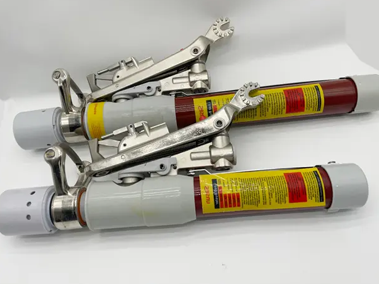
Breaking a live circuit involves volatile physics. When you separate contacts under an active load, the electricity does not simply stop. It seeks the path of least resistance. The widening air gap between the parting contacts quickly ionizes. This ionization creates a sustained, high-temperature plasma arc. The arc burns extremely hot and remains highly destructive. Left unmanaged, it threatens nearby linesmen and damages permanent infrastructure.
Many grid components face strict operational limitations. Standard disconnect switches provide a visible physical break in the circuit. Cutouts and power fuses protect against overcurrent. However, engineers did not design them to break a live load current safely on their own. They lack internal arc-quenching chambers. Opening a standard disconnect under load without auxiliary help invites disaster. The resulting flashover can bridge phases or strike the operator.
Portable intervention offers the most reliable solution. The industry relies heavily on portable interruption devices to manage this problem. These tools act as external, temporary interrupters. They bear the full brunt of the electrical arc. By taking on the arc flash hazard, they protect the permanent switchgear. More importantly, they protect the operator standing below. You attach the tool, break the load safely, and move on to the next switch.
Understanding the internal mechanics requires looking closely at current flow. First, you must manage current redirection. When you open the primary disconnect, the current needs an immediate alternate path. The tool provides exactly that. It creates a temporary parallel circuit. The electricity flows directly through the internal mechanisms of the tool. It chooses this path rather than jumping the widening air gap outside.
Next, the device relies on severe mechanical tension. An internal spring-loaded mechanism stores potential energy. As you pull down firmly on the device, you stretch an internal spring. Tension builds steadily. You must continue pulling until the mechanism reaches a precise, engineered trip point. This design guarantees the operator cannot accidentally slow down the break speed.
High-speed separation drives the actual arc quenching process. The trigger release happens violently and instantly. Human hands cannot pull a switch fast enough to prevent arcing. The internal contacts separate at a speed far exceeding human capability. This rapid movement draws the arc deep inside the tool housing. Here is the exact mechanical sequence that neutralizes the threat:
Trigger Activation: The spring trips, rapidly separating the internal moving contact from the stationary contact.
Arc Elongation: The parting contacts stretch the electrical arc inside a confined tubular chamber.
Ablative Reaction: The intense heat hits the "arc trailer" or ablative liner. This liner typically consists of Delrin or similar polyoxymethylene materials.
Gas Generation: The burning ablative material instantly releases a concentrated burst of de-ionizing gas.
Final Extinction: This gas floods the arc path. The chemical reaction quenches the fault exactly at the first zero-crossing of the alternating current.
This entire sequence happens in milliseconds. The combination of rapid physical elongation and chemical gas suppression starves the arc completely. It neutralizes the electrical fault before it can escape the dielectric chamber.
Field execution demands strict adherence to operational protocols. You must perform every step precisely to ensure safety. First, you handle hot stick integration. You mount the tool onto a standard universal fiberglass hot stick. The hot stick provides the necessary dielectric standoff distance. You must verify the attachment locks securely before lifting it toward the power line.
Engagement requires careful positioning. You hook the device directly across the target disconnect. Typically, you attach the upper probe to the stationary upper contact of the cutout. Then, you secure the lower catch onto the pull-ring of the fuse tube or disconnect blade. It must sit firmly in place. Proper engagement ensures the parallel circuit forms correctly before the main contacts part.
The physical execution centers on the pull. You must apply a smooth, continuous downward stroke. Do not hesitate. Hesitation can compromise the parallel path. You pull steadily until the internal mechanism trips. At that exact moment, the circuit breaks safely. Field operators rely heavily on this universal motion. In fact, many industry staples function exactly this way. You will often hear linesmen refer to this device colloquially as a loadbuster. They operate using this exact, standardized sequence across various utility environments.
After a successful break, you manage removal and resetting. You safely unhook the device from the open disconnect. Lower it to the ground. Depending on the specific model, you must reset it. Some models feature an external reset. Others use an internal auto-resetting mechanism. You prepare it thoroughly for the next switching operation.
Step Sequence | Physical Action | Operator Focus |
|---|---|---|
1. Integration | Attach device to fiberglass hot stick | Verify secure locking and correct stick length |
2. Engagement | Hook across upper contact and pull-ring | Ensure solid seating to establish parallel circuit |
3. The Pull | Execute continuous downward stroke | Avoid hesitation; pull until the spring trips |
4. Removal | Detach from the open disconnect | Maintain safe clearance from energized lines |
5. Reset | Reset internal spring mechanism | Verify latch engages for the next operation |

Procuring the right equipment requires rigorous technical evaluation. You must match the device capabilities to your actual grid conditions. Start by analyzing electrical specifications versus system reality. Manufacturers rate these devices strictly. You will see maximum design voltages like 15kV, 27kV, or 38kV. You will also see maximum interrupting currents, typically around 600A. You must map these ratings directly to your network requirements. Never deploy a device rated lower than your system's peak transient voltage.
Ergonomics heavily influence operator safety and fatigue. You must address the physical weight of the device. When you mount a tool at the end of an extended hot stick, it creates a massive lever. A heavy head creates extreme torque on the operator's wrists and shoulders. Lighter load break tools drastically reduce this physical strain. They improve positioning accuracy. Better accuracy means fewer slips and safer engagements during adverse weather conditions.
Reset mechanisms dictate field efficiency. Engineers design these mechanisms in two primary styles. External resets require the linesman to manually press the device against a hard surface to recock the spring. This proves highly reliable but slows down operations. Internal or auto-reset mechanisms allow faster turnarounds. However, they introduce more mechanical complexity. You must evaluate the trade-offs. Faster field speeds might require more frequent maintenance.
Universal compatibility rounds out the evaluation process. Your grid likely features various brands of cutouts, power fuses, and disconnect switches. The tool geometry must interface seamlessly with all of them. A rigid tool that only fits one brand causes massive logistical headaches.
Evaluation Dimension | Primary Consideration | Field Impact |
|---|---|---|
Electrical Rating | Voltage (kV) & Amperage (A) Limits | Dictates safe operational boundaries on the grid. |
Tool Ergonomics | Overall Weight & Balance | Reduces operator fatigue and improves hook accuracy. |
Reset Mechanism | External Manual vs. Internal Auto | Balances mechanical simplicity against field reset speed. |
Compatibility | Universal Cutout Interface | Ensures one tool functions across varied grid hardware. |
You cannot treat these devices like static wrenches. They represent consumable-heavy assemblies. Every successful operation degrades the internal components slightly. The intense heat causes the internal contacts to pit. The Delrin ablative liners literally burn away to produce the quenching gas. Furthermore, the internal springs gradually lose tension after hundreds of compressions. Recognizing this lifecycle reality is the first step toward safe implementation.
Strict inspection protocols prevent accidents. You must mandate visual inspections before every single shift. Linesmen should never guess about tool readiness. A quick visual audit reveals critical warning signs. If operators see issues, they must pull the device from service immediately.
Exhaust Muffler: Check for severe clogging or physical damage. Gas must vent freely.
Carbon Tracking: Inspect the exterior fiberglass tube. Black carbon streaks indicate surface insulation breakdown.
Reset Latch: Ensure the mechanism catches firmly. A slipping latch risks premature firing.
Contact Wear: Examine the visible probe tip. Look for excessive melting or severe pitting.
Stroke Length: Verify the device extends fully. A short stroke fails to separate the contacts completely.
Compliance and standardized testing maintain your safety baseline. Organizations like OSHA and IEEE set strict guidelines for live-line tools. You must schedule routine dielectric testing. The fiberglass housing must maintain its insulating properties. Additionally, you should mandate factory refurbishments based on operation counts. Manufacturers will rebuild the internal chamber and replace the worn ablative liners.
Neglecting these procedures leads to severe consequences. The cost of failure here involves human life and catastrophic grid damage. If you ignore maintenance, the device invites internal flashovers. An internal flashover means the tool fails to interrupt the arc. The plasma escapes the chamber. It blows through the housing and engulfs the operator. Proper lifecycle management is non-negotiable.
Safe live switching relies entirely on specialized intervention. These temporary interrupters combine precise mechanical timing with chemical gas-quenching. Together, these forces rapidly neutralize high-energy arc hazards. They protect your linesmen and your permanent infrastructure from catastrophic electrical faults.
When selecting your equipment, prioritize proven arc-interruption reliability. Focus heavily on operator ergonomics. A lighter device prevents fatigue and ensures safer engagements. Always establish predictable maintenance schedules to manage the consumable internal parts.
Take action to secure your field operations. Review your current network voltage and amperage requirements today. Audit your existing fleet of portable switching devices to identify aging units. Finally, consult detailed technical documentation to find the safest solutions for your crews.
A: No. They are designed only for breaking standard load currents, typically up to 600A. Fault currents, which can spike into the thousands of amps, require actual circuit breakers or reclosers designed for massive fault interruption.
A: A disconnect switch provides a visible physical break in the circuit but often cannot safely interrupt the active load. The portable tool attaches externally to safely open that disconnect without drawing a hazardous arc.
A: It depends on the operation count and severity of the loads broken. Most manufacturers mandate inspection before every use and require a counter-based or condition-based factory rebuild cycle, often every 500 to 1000 operations.


