
T: +86-18906892820
F4-19037-6#, Yiwu Intl Trade Mart, Yiwu Jinhua, Zhejiang, China (Mainland)

Views: 154 Author: Site Editor Publish Time: 2026-06-04 Origin: Site


Live-switching overhead and underground distribution systems carries inherent safety and operational risks. Utilities face increased downtime without the right portable arc-extinguishing equipment. Field crews confront unacceptable electrical hazards daily. The physical action of operating a load break tool might seem straightforward. Correct execution requires strict adherence to operating parameters. Operators must follow precise safety angles and respect absolute circuit restrictions.
This guide breaks down standardized procedures governing how to use a load break tool. We detail critical safety boundaries to prevent catastrophic equipment failures. You will find a robust framework for evaluating modern portable devices. We align tool selection directly to current grid safety standards and procurement requirements.
Economic & Safety Leverage: Deploying one portable tool per line truck eliminates the need for expensive, built-in arc-extinguishing switches on every network device.
Standardized Operation: Safe usage relies on a strict "Attach, Pull, Detach" mechanical sequence executed at specific angles (typically 45 degrees) to ensure proper arc interruption.
Strict Operational Boundaries: Tools must never be used for permanent connections, phase-to-phase switching, or on empty transformers without verifying exact voltage and amperage ratings.
Procurement Drivers: Modern tool selection hinges on operator ergonomics (glove-friendly resets, reduced weight, enclosed springs) and verifiable lifecycle tracking.
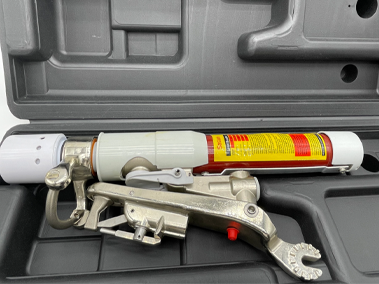
Utilities must balance capital budgets against stringent worker safety regulations. Installing heavy interrupter switches at every network disconnect point requires massive capital expenditure. The cost-efficiency model offers a superior alternative. System planners install standard disconnects across the grid. They then equip each line truck with a portable loadbuster. This approach centralizes the arc-extinguishing capability in the hands of the crew rather than scattering expensive hardware across thousands of poles.
Linemen rely on these devices to manage immense electrical energy safely. Understanding the internal physics builds crucial field trust. When an operator actuates the device, the current path diverts immediately into an internal chamber. An internal spring mechanism gathers tension during the downward pull. This spring releases suddenly, separating internal contacts at extremely high speeds.
Simultaneously, a specialized arc-extinguishing chamber activates. This chamber generates deionizing gases. These gases rapidly cool and extinguish the electrical arc internally. The tool interrupts the circuit safely without producing an external flashover. Operators remain shielded from dangerous high-voltage explosions.
Deploying portable interruption equipment delivers distinct advantages across various utility departments. Everyone from the financial office to the end consumer sees tangible improvements.
For Procurement: Drastically lowers capital expenditure on system-wide switchgear. Teams purchase fewer heavy switches.
For Linemen: Reduces exposure to hazardous electrical arcs. Streamlines the physical switching process during severe weather.
For End-Users: Minimizes total outage times. Crews reroute lines faster during storm restoration efforts.
Safe execution demands absolute precision. Regardless of the manufacturer, operators must eliminate hesitation. The mechanical motion must remain smooth, continuous, and highly decisive. Jerky movements can stall the internal spring mechanism. A stalled mechanism leads to incomplete arc interruption and potential flashovers.
Never approach a live line without verifying tool functionality. Operators must manually stretch the tool body first. This action verifies internal spring tension. It also confirms the reset mechanism functions properly.
Next, position the device at the correct approach angle. Industry standards mandate a strict 45-degree angle from directly below the device. This specific angle prevents dangerous side-loading forces on the cutout hinge. Securely lock the upper hook onto the disconnect device. Ensure the connection feels solid before proceeding.
Operators perform the interruption using an approved, insulated hot stick. Execute a firm, uninterrupted downward pull. Do not hesitate mid-stroke. Avoid jerky or bouncing motions entirely.
The internal mechanism relies on one continuous stroke. This continuous force transfers the load successfully. It trips the internal contacts and forces the deionizing gases to extinguish the arc. Operators must verify visual or audible confirmation. Listen for a distinct mechanical click. Look to see the tool lock fully into the open position.
Once you break the load successfully, roll the tool off the attachment hook. This rolling motion safely detaches the device from the newly de-energized equipment. Bring the device back down to the ground carefully.
Never attempt to reset the tool aloft. Do not reset it while it remains engaged with overhead or underground equipment. Operators must reset the mechanism only after complete removal. Ensure you clear the primary voltage area entirely before resetting the internal spring.
Misapplying portable interruption equipment causes catastrophic hardware failure. Safety managers must enforce absolute, non-negotiable operational boundaries. These devices handle immense power, but they possess strict physical limitations.
Crews must strictly confine these devices to temporary switching scenarios. Load break tools must never serve as permanent connections. They are not continuous duty switches. Leaving them hanging on a live line degrades the fiberglass housing and invites severe tracking failures.
Certain grid conditions exceed the physical capabilities of portable interruption chambers. Operators must memorize these critical prohibitions.
Do not use the device in suspected ferroresonance conditions. High-voltage spikes will destroy the internal contacts.
Prohibited for phase-to-phase operational use. The insulation rating cannot withstand phase-to-phase voltage differentials.
Do not switch unloaded transformers. Avoid switching capacitor banks outside of verified rating thresholds.
Operators must verify nameplate data before every single operation. You must confirm the specific tool exceeds the active circuit loads. For example, a nominal 14.4/25kV tool featuring a 900A peak maximum must never touch a 34.5kV circuit. Check the circuit blueprints. Verify the anticipated amperage. Attach the device only after confirming these exact numbers.
Parameter | Safe Operation Limit | Danger Zone (Do Not Operate) |
|---|---|---|
Approach Angle | 45 degrees from below | Side-loading / extreme lateral angles |
Connection Duration | Temporary (seconds) | Permanent installation |
Circuit Type | Phase-to-ground | Phase-to-phase |
Mechanism Stroke | Smooth, continuous pull | Jerky, stopping mid-stroke |
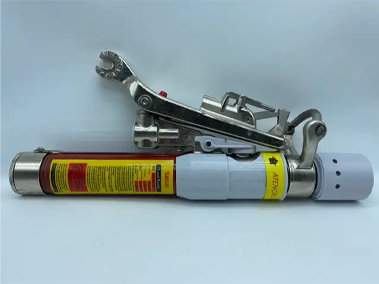
Evaluating new utility contracts requires deep technical scrutiny. Replacing aging fleet inventories means looking far beyond basic electrical ratings. Procurement teams must prioritize factors ensuring operator compliance. You must also evaluate engineering choices driving tool longevity.
Evaluate new models for overall weight reduction. Traditional units are notoriously heavy. Holding a heavy device at the end of a long hot stick causes severe shoulder strain. Modern engineering utilizes advanced composites. These updated units drop overall weight by up to 20-25 percent. They achieve this weight loss without sacrificing structural durability or dielectric strength.
Safety regulations mandate thick, insulated rubber gloves. Look for redesigned reset triggers. Seek out anti-pinch paddles. These features allow linemen wearing heavy Class 2 or Class 3 insulating gloves to reset the mechanism effortlessly. They can do this without ever removing protective gear.
Prioritize designs containing no exposed external springs. External springs catch on rubber gloves. They snag and tear expensive personal protective equipment (PPE). Enclosed mechanisms protect both the tool and the operator.
Modern fleets demand built-in safety redundancies. Ensure the presence of highly visible safety locking pins. Operators need unambiguous open and closed mechanical indicators. When working at night or during storms, high-contrast visual indicators prevent fatal operational sequencing errors.
Evaluation Category | Traditional Designs | Modern Upgrades |
|---|---|---|
Weight Profile | Heavy (high shoulder strain) | Composite materials (20-25% lighter) |
PPE Compatibility | Exposed springs (snag hazards) | Fully enclosed mechanisms |
Reset Mechanism | Difficult with thick gloves | Glove-friendly anti-pinch triggers |
Lifecycle Tracking | Honor system (manual logs) | Built-in automatic stroke counters |
Portable interruption devices are strictly consumable items. They endure high-stress mechanical forces. They do not last forever. The internal components degrade slightly with every single arc interruption.
High-end models feature built-in stroke counters. This simple addition revolutionizes fleet management. It completely replaces the highly unreliable "honor system" of field logging. Safety managers now rely on hard, objective data to schedule maintenance cycles. If a tool shows 1,200 operations, the depot knows exactly when to overhaul it.
The industry baseline for a quality unit ranges between 1,500 and 2,000 operations. This lifespan assumes moderate load conditions. Interrupting fault-level currents degrades the contacts significantly faster. Always factor in the severity of the loads your crews typically manage.
You must mandate strict inspection schedules. Execute full mechanical and dielectric inspections every 6 to 12 months.
Check the internal spring for sluggish recoil behavior.
Inspect the internal contact tips for excessive pitting or burn marks.
Examine the outer fiberglass tube for deep scratches or moisture ingress.
Verify the safety locking pin engages firmly.
Any tool exhibiting sluggish spring recoil requires immediate attention. Burned contact tips or compromised fiberglass tubes mean the device is unsafe. Safety managers must immediately tag these units out of service.
Mastering how to use a load break tool bridges the vital gap between field safety and grid reliability. It requires strict adherence to precise attachment angles. Operators must deliver smooth mechanical execution every single time. Utility crews must also possess a crystal-clear understanding of absolute circuit limitations.
Utility procurement and safety officers face immediate next steps. Conduct an immediate audit of all current line trucks. Check your existing inventory for tool expiration lifecycles. Verify your fleet meets strict environmental health and safety compliance regarding tool weight. Prioritize modern ergonomic designs. Finally, ensure field crews receive updated training on the latest glove-friendly reset protocols.
A: Most industry-standard tools are rated for 1,500 to 2,000 operations, depending on the severity of the load being interrupted. Built-in operation counters and mandatory 6-12 month inspections are recommended to track this lifecycle accurately.
A: No. The tool must only be used on devices explicitly compatible with portable load break equipment (such as appropriately designed disconnects, power fuses, or fuse limiters) and strictly within the tool's maximum voltage and amperage ratings.
A: Operating from directly below the device at a 45-degree angle ensures smooth mechanical travel, prevents side-loading or binding of the cutout hinges, and keeps the operator safely out of the direct path of potential arc flashes or falling debris.
A: "Loadbuster" is the trademarked name of a highly popular, specific portable load break tool manufactured by S&C Electric Company. Over time, the term has been widely adopted in the industry as a colloquial catch-all for any portable load break tool, similar to "Kleenex" for tissues.


