
T: +86-18906892820
F4-19037-6#, Yiwu Intl Trade Mart, Yiwu Jinhua, Zhejiang, China (Mainland)

Views: 125 Author: Site Editor Publish Time: 2026-10-10 Origin: Site


Managing arc interruption demands absolute precision in modern electrical infrastructure. Failing to clear faults quickly risks catastrophic equipment damage, intense fires, and severe facility downtime. Medium and high-voltage power systems face intense operational stresses daily. Engineers must ensure facility safety, maintain strict compliance, and protect critical uptime. Historically, sulfur hexafluoride (SF6) gas handled these heavy-duty interruption tasks. Now, heavy regulatory pressure limits SF6 due to its severe environmental impact and global warming potential.
Vacuum interruption technology currently serves as the default standard for medium-voltage environments. It also rapidly advances into much higher voltage tiers. This guide provides electrical engineers, facility managers, and procurement teams with a clear, objective framework. We explore core engineering benefits, key operational applications, and strict buying considerations. You will learn how to mitigate system risks while navigating standard compliance. By the end, you will possess actionable insights to specify and source optimal vacuum circuit breakers for complex industrial and utility networks.
Operational Reliability: VCBs offer superior dielectric recovery and require significantly less maintenance than air or oil alternatives.
Application Range: While dominant in 11kV–33kV medium-voltage systems, the deployment of the high voltage vacuum circuit breaker is expanding due to multi-break designs and improved vacuum bottle manufacturing.
Procurement Focus: Sourcing decisions must prioritize specific duty cycles, standard compliance (IEC/ANSI), and precise fault-level ratings rather than just upfront capital cost.
Risk Mitigation: Understanding inherent limitations, such as potential switching overvoltages (current chopping), is essential for proper system integration.
Vacuum technology revolutionizes how electrical systems handle immense energy loads. The core engineering mechanism relies on the sheer absence of matter. When contacts separate inside a vacuum, an arc forms from the vaporized metal of the contacts themselves. This metal vapor expands outward at rapid speeds. As the alternating current reaches its natural zero-crossing point, the vapor condenses back onto the contacts and surrounding shields almost instantly.
This rapid condensation creates exceptional dielectric strength within microseconds. The vacuum environment clears faults typically within the very first current zero. Other breaker types often require multiple cycles to extinguish an arc. This speed minimizes thermal stress on surrounding switchgear components and significantly extends the lifespan of the electrical network.
Furthermore, manufacturers design vacuum interrupters (VIs) to be completely hermetically sealed. This sealed architecture provides unparalleled safety and longevity. Environmental contaminants like heavy industrial dust, coastal humidity, or chemical vapors simply cannot penetrate the arc chamber. Facility operators gain a massive advantage here. Maintenance teams never need to open the chamber to clean contacts, replace dielectric oil, or top up insulating gases. The sealed nature inherently guarantees performance consistency over decades.
Environmental compliance acts as another primary driver for adoption. Traditional SF6 breakers utilize a gas with a global warming potential 23,500 times greater than carbon dioxide. Vacuum technology boasts absolute zero global warming potential. Switching to vacuum aligns directly with stringent 2025+ corporate ESG goals. It insulates facilities from evolving environmental regulations and future gas handling taxes.
Mechanically, these units endure extreme punishment. A standard vacuum interrupter easily supports high switching frequencies. Many models comfortably achieve up to 30,000 mechanical operations. This durability far exceeds the mechanical life limits of legacy air-blast or minimum-oil breakers, making vacuum the definitive choice for active, heavy-duty circuits.
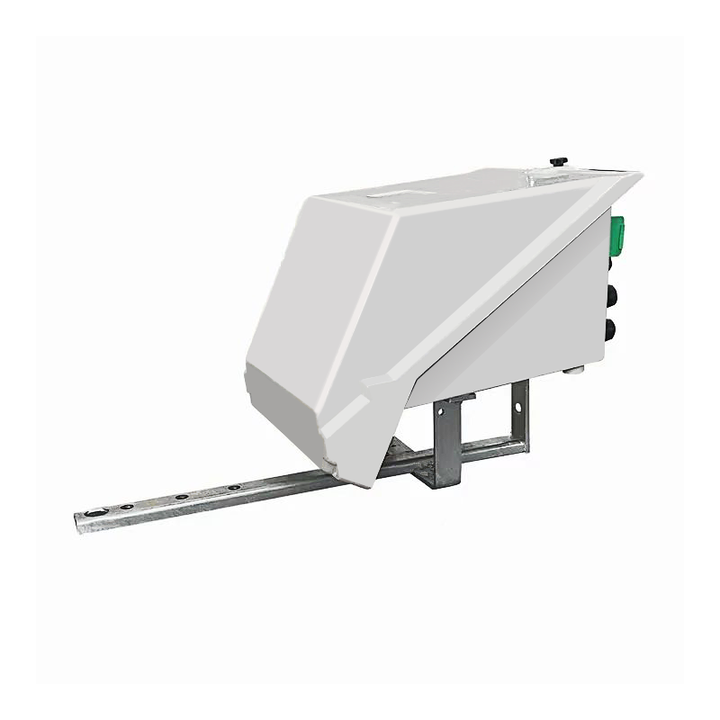
Different facilities demand unique interruption profiles. Vacuum technology adapts seamlessly across various industrial and utility applications.
Heavy manufacturing plants rely heavily on these breakers for aggressive motor switching tasks. Industrial motors require frequent starting and stopping, generating high inrush currents. Vacuum units handle these daily operational spikes effortlessly. Capacitor bank switching presents another complex challenge due to capacitive charging currents. Vacuum interrupters clear these currents cleanly without reignition. Similarly, arc furnace control in steel mills demands continuous, repetitive switching. The high mechanical endurance of vacuum mechanisms makes them the only logical choice for such brutal duty cycles.
Utility distribution networks also depend on vacuum systems to safeguard sensitive infrastructure. You will find them widely deployed in medium-voltage substations. They act as the primary protection barrier between high-voltage transmission step-downs and local commercial grids. Railway traction networks utilize single-phase vacuum units extensively. Traction systems experience frequent short circuits from overhead line debris. The rapid fault-clearing capabilities of vacuum technology isolate these rail faults instantly, preventing widespread grid disturbances.
Recent technological shifts have fundamentally changed the voltage limitations of this technology. Historically, vacuum bottles struggled to maintain dielectric strength beyond 38kV. Today, the rise of the high voltage vacuum circuit breaker transforms transmission engineering. Manufacturers overcome traditional limits by utilizing series-connected interrupters. They stack multiple vacuum bottles in series to share the voltage stress. Combined with advanced contact geometries like axial magnetic field (AMF) designs, these multi-break configurations now push past 72.5kV. Many modern installations effectively deploy them at 145kV and beyond, securing their viability for primary transmission-level applications.
Application Type | Typical Voltage Level | Switching Frequency | Primary Engineering Challenge |
|---|---|---|---|
Motor Starting | 4.16kV - 11kV | High (Daily) | Handling high inductive inrush currents. |
Capacitor Banks | 11kV - 33kV | Medium (Weekly) | Preventing restrikes during capacitive switching. |
Railway Traction | 25kV (Single Phase) | High (Daily) | Clearing frequent overhead line short circuits. |
Transmission Grids | 72.5kV - 145kV | Low (Fault only) | Maintaining dielectric strength across large gaps. |
No engineering solution is completely flawless. Demonstrating operational expertise requires a balanced view of both advantages and physical limitations.
The core advantages stand out immediately during facility design. Vacuum breakers offer an incredibly compact footprint. The extremely short gap required for contact separation allows engineers to shrink switchgear panel sizes significantly. This space-saving trait proves invaluable in urban substations or crowded offshore platforms. Furthermore, they present exceptionally low fire risks. They contain no flammable oil or explosive gases. Routine maintenance drops to virtually zero regarding the arcing chamber itself.
However, engineers must address the "current chopping" phenomenon. Because vacuum possesses immense arc-quenching power, it can sometimes force the current to drop to zero before the natural AC cycle zero-crossing. This abrupt interruption acts like slamming a valve shut on a high-pressure water pipe. It generates sudden high-voltage transients. When connected to inductive loads, these transients can damage sensitive insulation.
System designers implement specific mitigations to counter this physical reality. If your circuit feeds older transformers or heavy inductive motors, you must integrate proper surge protection.
Surge Arresters: Metal-oxide varistors (MOVs) clamp high voltage spikes, shunting the excess energy safely to ground.
RC Snubbers: Resistor-capacitor networks slow down the rate of voltage rise, completely neutralizing the steep transients caused by current chopping.
You must also plan for a potential loss of vacuum. While exceedingly rare in modern manufacturing, a micro-leak in the bottle's brazed joints can occur over decades of thermal cycling. If atmospheric air enters the bottle, it suffers a complete loss of interrupting capability. Because visual inspections cannot detect internal vacuum loss, facility teams must rely on specific diagnostic testing strategies during routine shutdowns.
Procuring these complex devices requires precision. You must evaluate core electrical ratings meticulously to ensure safe facility integration.
Start by defining the necessary data for shortlisting. Your continuous current rating dictates how much normal load the breaker carries daily without overheating. The short-circuit breaking capacity, measured in kiloamps (kA), defines the maximum fault current it can safely interrupt. Finally, you must verify the Basic Insulation Level (BIL). The BIL rating ensures the equipment survives transient lightning strikes and extreme switching surges without internal flashovers.
Standard compliance acts as your ultimate safety net. Never accept internal manufacturer testing alone. Emphasize the strict requirement for certified testing under international frameworks like IEC 62271-100 or ANSI/IEEE C37.04. Buyers must aggressively request independent type-test certificates. Laboratories like KEMA or CESI provide unbiased proof that the breaker truly performs under catastrophic fault conditions.
Next, evaluate the operating mechanism types. The mechanism drives the contacts open and closed.
Spring-Charged Mechanisms: These remain the highly reliable, global standard. A motor charges mechanical springs, storing energy to snap the contacts apart. They are well-understood and easily serviced.
Magnetic Actuator Mechanisms: These utilize electromagnetic force with bistable permanent magnets. They feature only one moving part. This drastically reduces mechanical wear, making them ideal for ultra-frequent switching environments like arc furnaces.
Finally, decide between retrofitting or buying new. If your facility currently runs legacy air-magnetic or oil switchgear, assess the busbar condition. If the metal enclosures remain robust, a roll-in retrofit solution saves massive capital. Engineers simply replace the old breaker truck with a custom-engineered vacuum unit. Conversely, if the legacy insulation shows thermal degradation, invest in a completely new, arc-resistant switchgear lineup.
Successful implementation extends far beyond the initial purchase. Proper commissioning protocols define the long-term safety of the installation.
Post-installation testing prevents energizing compromised equipment. Before switching on power, technicians must verify vacuum integrity. Visual checks prove useless here. Teams typically perform a High-Pot (high potential) test. By applying a specific high voltage across the open contacts, technicians can verify if the vacuum holds the voltage without leaking current. Advanced facilities may also utilize MAC (Magnetron Atmospheric Condition) testing. The MAC test measures actual internal pressure via electromagnetic fields, providing precise predictive data regarding bottle health.
Routine operations demand a shift in maintenance philosophy. Legacy systems required preventative contact cleaning and oil filtering. Vacuum units require predictive, mechanical-focused care. Focus your maintenance hours entirely on the operating mechanism. Technicians should perform careful mechanism lubrication according to factory schedules. Utilize specialized analyzers to conduct timing tests. These tests measure the exact millisecond differential between pole closures. You must also track contact travel and wear measurements. Over thousands of operations, the contacts physically vaporize slightly. Measuring this "wear allowance" tells you exactly when the bottle nears its end-of-life.
Evaluating lifecycle economics clarifies the true value of these systems. The initial capital expenditure often sits higher than basic legacy alternatives. However, the operational expenditure drops drastically over a thirty-year lifespan. Facilities eliminate costs associated with toxic gas handling procedures, complex regulatory reporting, routine oil testing, and labor-intensive contact replacements. This long-term financial efficiency makes the technology exceptionally sound for modern operations.
Modern electrical infrastructure requires robust, reliable, and compliant interruption technology. Vacuum circuit breakers present the most economically and operationally sound choice for upgrading power control systems. They eliminate environmental liabilities while delivering rapid, highly effective fault clearing. As long as engineers respect their operational limits—specifically regarding high-voltage transients—they guarantee decades of stable performance.
To move forward successfully, evaluate your specific facility demands immediately. Do not guess your fault levels. Conduct a comprehensive load flow and short-circuit study to determine exact continuous and breaking ratings before requesting vendor quotes. Finally, consult directly with qualified switchgear application engineers. They will verify your exact sizing needs and design appropriate surge protection networks to safeguard your inductive loads.
A: You cannot detect vacuum loss visually. Technicians must perform a High-Pot (high potential) test by applying specified AC or DC high voltage across the open contacts. If the vacuum is intact, it withstands the voltage. If it breaks down or flashes over, the vacuum is compromised. Advanced teams also use MAC (Magnetron Atmospheric Condition) testers to measure internal pressure directly.
A: The lifespan depends on electrical and mechanical duty. Mechanically, robust operating mechanisms easily exceed 20,000 to 30,000 operations. Electrically, a unit can clear rated short-circuit faults dozens of times or switch normal load currents tens of thousands of times. Generally, expect a reliable service life of 20 to 30 years under normal utility or industrial conditions.
A: Regulatory pressure heavily restricts SF6 due to its massive global warming potential. Vacuum interrupters use no greenhouse gases, making them environmentally benign. They also eliminate the need for expensive gas leak monitoring, top-ups, and specialized end-of-life gas recovery. For 11kV to 33kV ranges, vacuum provides equivalent or superior arc-quenching performance without the environmental baggage.
A: Yes, in specific applications. Because vacuum interrupts current so rapidly, it can sometimes chop the current before natural zero. This creates steep high-voltage transients. When switching inductive loads like older transformers or large industrial motors, you must install surge arresters or RC snubbers to protect the load's insulation from these sudden voltage spikes.


