
T: +86-18906892820
F4-19037-6#, Yiwu Intl Trade Mart, Yiwu Jinhua, Zhejiang, China (Mainland)

Views: 168 Author: Site Editor Publish Time: 2026-03-06 Origin: Site


Have you noticed the disc strings on high voltage towers? Many ask what is a suspension insulator and why it matters. A suspension insulator supports conductors above 33kV safely, providing insulation and mechanical strength in transmission lines. In this article, you will learn suspension insulator definition in power system use, along with its working principles, types, and key applications. Sasun's suspension insulator products offer reliable solutions for harsh environments, so you can learn more about our products for modern overhead networks.
A suspension insulator is a high voltage insulator used to separate energized conductors from grounded transmission towers. Engineers define it as an insulating device that supports overhead line conductors while preventing leakage current from flowing into the structure. This is why the suspension insulator function in overhead line systems is both protective and structural. In practice, they are installed in the form of a suspension insulator string, where multiple discs work together to withstand electrical stress. This makes them especially suitable for long-distance power transmission, where insulation reliability directly impacts system safety and operational stability.
Suspension insulators are mainly used in overhead transmission lines above 33kV, where pin type insulators become too large and inefficient. Their modular construction allows utilities to add more discs as voltage increases, which is a key advantage in extra-high-voltage systems. When you see suspension insulator used in transmission lines, it is usually hanging vertically from the cross-arm of a tower, supporting the conductor below. This arrangement keeps the energized line safely separated from the tower body. It also improves lightning performance because the conductor is suspended at a distance from grounded metal structures. In large-scale transmission projects, suppliers like Sasun often provide composite and porcelain suspension insulators designed to meet IEC and ANSI/IEEE requirements.
The suspension insulator function in overhead line networks is to provide insulation while carrying mechanical load. Electrically, it blocks current leakage and prevents flashover between the conductor and the tower. Mechanically, it supports the weight of long-span conductors and allows movement under wind or vibration. This dual role is why overhead insulators like suspension types are preferred in high voltage applications. Their design also reduces stress concentration because the string can swing freely, which protects the conductor and tower hardware from fatigue over time.
Suspension insulators are critical because high voltage transmission requires components that can handle both intense electric fields and strong mechanical forces. Each disc is typically rated around 11kV, and by connecting discs in series, engineers can build insulation strings suitable for 110kV, 220kV, or even higher systems. This adaptability makes suspension insulator application in high voltage transmission extremely common worldwide. Without them, utilities would face higher risk of insulation breakdown, outages, and costly equipment damage. Their reliability directly supports grid stability and long-term system safety. Modern brands such as Sasun emphasize designs with improved creepage distance and hydrophobic surfaces to reduce leakage current in polluted or coastal regions.
Typical Disc Units Needed for Common Voltage Levels
Line Voltage (kV) | Approximate Disc Units |
69 | 4–5 |
110 | 8–10 |
220 | 16–20 |
500 | 34+ |
Tip: For high voltage projects, always select suspension insulators based on both voltage rating and environmental contamination level.
Suspension insulators work by resisting the flow of electric current through high dielectric strength materials such as porcelain, toughened glass, or polymer composites. Their primary job is to keep the conductor electrically isolated from the grounded tower structure. When alternating current flows through the line, each disc in the suspension insulator string develops a potential difference. However, this distribution is uneven because discs closer to the conductor experience higher electrical stress. This is why grading rings are often used to balance voltage and improve long-term performance. Proper insulation behavior ensures safe operation even under heavy electrical load.
One major advantage of suspension insulators is their mechanical flexibility. Because the string hangs vertically, it can swing freely in response to wind, ice loading, or conductor vibration. This movement reduces mechanical stress that could otherwise crack rigid insulators. Suspension insulators also support long-span conductors that carry significant weight. Their flexible design prevents excessive tension from transferring directly into tower hardware. In this way, they protect both the overhead line insulator assembly and the entire transmission structure, making them essential for reliable high voltage networks.
Voltage distribution is a key engineering challenge in suspension insulator design. In a string of discs, the disc nearest the conductor carries the highest voltage stress, while the top disc near the tower carries less. This uneven distribution reduces overall string efficiency and may lead to puncture failure at the most stressed unit. Engineers address this through improved hardware design, grading rings, and optimized disc spacing. Understanding this behavior is essential when designing suspension insulator strings for extra-high-voltage systems, where electrical stress management directly affects service life.
Voltage Stress Along a Suspension String
Disc Position in String | Relative Voltage Stress |
Bottom (near conductor) | Highest |
Middle discs | Moderate |
Top (near tower) | Lowest |
Suspension insulator construction and design rely on modular disc units connected by metal fittings. Each unit consists of an insulating body and a metallic cap-and-pin connection. By assembling these units into a chain, engineers create a suspension insulator string capable of handling high voltage stress. The modular approach makes it possible to customize the number of discs depending on voltage level. This design also improves maintenance, because damaged discs can be replaced individually instead of removing the entire insulator assembly.
The cap-and-pin structure is the most widely used suspension insulator design. Each disc has a forged steel cap on top and a galvanized steel pin at the bottom, bonded into porcelain or glass. These discs are linked through ball-and-socket joints, creating flexibility and strength. The cap-and-pin suspension insulator is popular because it combines high mechanical strength with proven insulation performance. Utilities prefer it because it is easy to inspect, widely standardized, and cost-effective for large transmission networks.
A typical suspension insulator string includes insulating discs, metal links, conductor clamps, and tower attachment fittings. The upper end connects to the cross-arm, while the lower end supports the energized conductor. Additional components such as grading rings may be installed to improve voltage distribution. This complete system ensures both electrical insulation and mechanical stability. Engineers must carefully select string length, disc material, and hardware configuration based on line voltage, pollution level, and expected mechanical load. Companies like Sasun often highlight full-process testing and strict quality control to ensure consistent performance in demanding grid environments.
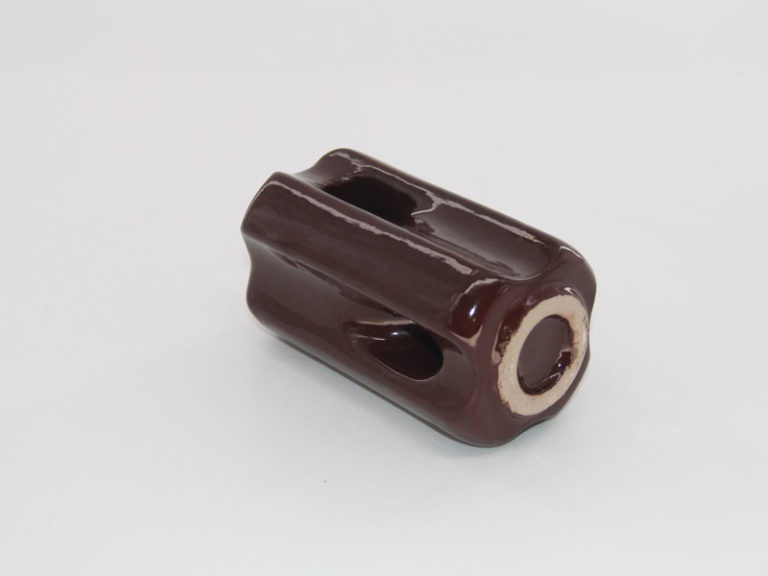
Cap-and-pin suspension insulators are the most common type used worldwide. They provide strong insulation and excellent mechanical support for overhead conductors. Their modular discs allow easy replacement when damaged, which reduces downtime. They are widely used in transmission networks because of their durability and standardized design.
Interlink suspension insulators, also called Hewlett type, use porcelain channels and U-shaped steel links instead of cap-and-pin joints. This design offers higher mechanical strength and ensures continued support even if porcelain breaks. They are often chosen for harsh environments where mechanical stress is extreme, such as mountain regions or heavy ice zones.
Polymer suspension insulators are modern composite designs made of fiberglass cores with silicone rubber sheds. Compared to porcelain insulators, they are lighter, easier to install, and perform better in polluted environments. Porcelain remains popular for its long-term durability, but polymer designs are increasingly used in coastal and industrial areas where contamination is severe. Manufacturers such as Sasun have developed composite suspension insulators with hydrophobic silicone rubber surfaces to enhance performance under heavy pollution.
Common Suspension Insulator Materials
Material Type | Key Advantage | Best Use Environment |
Porcelain | Durable and strong over decades | General transmission lines |
Toughened Glass | Visible fault detection | High voltage inspection needs |
Composite Polymer | Pollution resistant, lightweight | Coastal and industrial zones |
Suspension insulators are preferred because they can handle much higher voltages than pin insulators. By adding more discs, engineers can scale insulation strength for extra-high-voltage lines. Their swinging design reduces mechanical stress, which improves reliability in windy or icy regions.
For 110kV and 220kV transmission systems, suspension insulator strings are standard. Each disc contributes about 11kV of insulation capacity, so longer strings are used for higher voltages. This modular approach ensures adaptability for future grid upgrades.
Overhead insulators such as suspension types are essential for long-distance transmission because they ensure stable insulation over large spans. They prevent leakage current, flashover, and mechanical failure, which keeps electricity flowing reliably across national grids.
Pin insulators are commonly used in lower-voltage distribution systems because they are simple and cost-effective. However, once voltage levels rise above 33kV, pin insulators become bulky, heavy, and harder to install safely. Suspension insulators, in contrast, are built as modular disc strings. This design allows engineers to increase insulation strength by adding more units, making suspension insulators the standard solution for high voltage transmission networks.
Suspension insulators provide greater mechanical flexibility because the string can swing slightly under wind or conductor movement. This reduces stress on both the tower structure and the conductor hardware. Another key advantage is maintenance efficiency. Utilities can replace only a single damaged disc instead of removing the entire assembly, which reduces downtime and lowers lifecycle costs.
Suspension insulators generally perform better in harsh outdoor conditions. Their hanging design helps them resist vibration damage and mechanical fatigue during storms. In addition, composite polymer suspension insulators offer improved resistance to pollution, moisture buildup, and salt contamination compared with traditional pin insulators, making them suitable for coastal and industrial regions.
Suspension insulators are typically installed on straight transmission line sections. They hang vertically from the tower cross-arm and primarily support the weight of the conductor. Their modular structure makes them ideal for long-distance overhead power delivery.
Strain insulators are designed for locations where conductor tension is highest. They are installed horizontally at sharp bends, dead ends, or river crossings. In these cases, the insulator must withstand strong pulling forces rather than only vertical load.
Engineers select suspension or strain insulators based on voltage level, tower geometry, conductor tension, and environmental stress. Using the correct insulator type ensures safe operation, stable mechanical support, and long-term reliability in modern power grids.
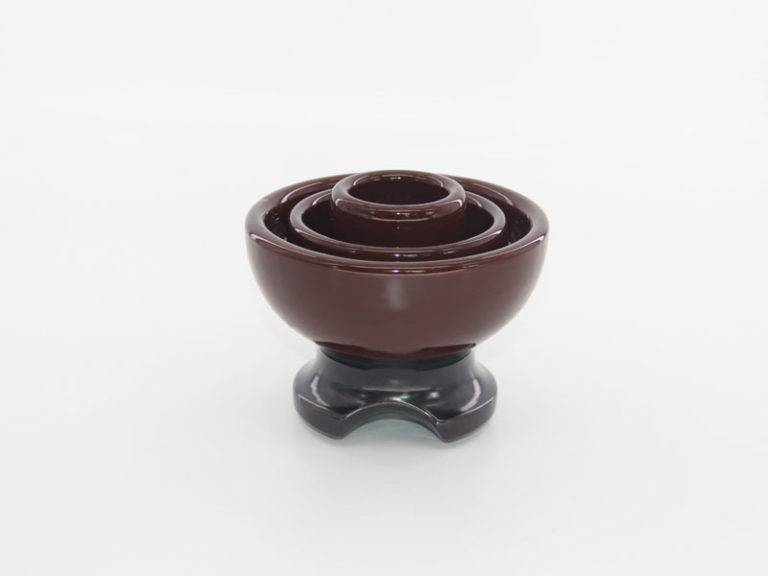
Porcelain remains a traditional material for suspension insulators because of its strong mechanical performance and resistance to aging. It has been used for decades in overhead transmission systems and provides stable insulation under normal operating conditions.
Toughened glass insulators are valued for their unique fault detection advantage. When a serious defect occurs, the glass disc can shatter visibly, making damaged units easy to identify during inspections. This feature improves maintenance efficiency in large transmission networks.
Composite polymer insulators are increasingly preferred in heavily polluted or coastal zones. Their hydrophobic surfaces resist contamination buildup and reduce leakage current risk. This makes polymer designs a reliable option for harsh industrial environments.
One challenge in suspension insulator strings is uneven voltage distribution. The disc closest to the energized conductor experiences the highest electrical stress, while the upper discs carry less load. This imbalance can reduce string efficiency and increase the risk of failure at the most stressed unit.
Grading rings are installed at the high voltage end of the string to smooth electric field concentration. They improve voltage balance across the discs, reduce corona discharge, and extend insulator service life.
Optimized string design, correct disc selection, and routine inspections are essential for maintaining reliability. Utilities often combine grading hardware with pollution-resistant materials to ensure stable performance in demanding high voltage systems.
Suspension insulators are essential for stable insulation on transmission towers. They support long-distance electricity delivery by preventing leakage current and maintaining safe conductor clearance from grounded structures.
These insulators perform reliably in coastal, industrial, and mountainous regions. Advanced materials such as polymer composites and toughened glass help improve resistance to moisture, salt fog, and heavy pollution exposure.
By reducing flashover risk and preventing dangerous current leakage, suspension insulators protect equipment, workers, and communities. Many B2B utilities also value suppliers like Sasun for offering compliant suspension insulator solutions that support both insulation performance and long-term line protection in modern power networks.
Understanding what is a suspension insulator shows its key role in high voltage transmission. Its modular disc string design offers strong insulation, flexibility, and easier maintenance. With porcelain, glass, and polymer options, it supports safe and reliable overhead networks. Sasun's suspension insulator products add value through durable performance in harsh environments and trusted support for modern power systems.
Q: What is a suspension insulator in power systems?
A: A suspension insulator provides insulation and mechanical support in high voltage transmission lines.Q: How does a suspension insulator string work?
A: A suspension insulator string uses disc units to spread voltage and protect overhead conductors.Q: Why are suspension insulators preferred for high voltage power transmission?
A: Suspension insulator designs handle higher voltages, swing under wind load, and reduce stress.Q: Suspension insulator vs pin type insulator—what is the difference?
A: Suspension insulator systems suit voltages above 33kV, while pin insulators fit lower ratings.


